
For the third time that evening, Joseph Connell staggered into the upstairs room of the Bricklayer’s Arms clutching a crate of Birra Moretti. He struggled, one-handed, to open the waist-high door that provided access to behind the bar. As usual, Harry the barman did not offer to help. The bribe that had guaranteed his silence regarding Joseph’s extracurricular activities did not extend to any other form of cooperation. Instead, Harry had smirked and nicknamed him Bugman.
The act of sliding the bottles onto the shelves of the refrigerator made Joseph shudder. In his mind’s eye he saw row after row of corpses laid out on slabs. Seventeen bodies: male and female, young and old, all of them there because of him.
A kick to the heels jolted Joseph out of his trance. Harry grumbled about his daydreaming before ordering him to collect the empties. Joseph knew it would be pointless to complain. After all, he had taken this job precisely because of the opportunities it provided. Tonight though, success looked highly unlikely.
He moved from table to table, building a tower of sticky glasses. Noisy twenty-somethings had packed the upstairs room, revelling in the flux of the here-and-now. Enjoy life while you can, Joseph said under his breath.
Something he would not be doing until he had paid his penance.
Joseph leaned over the bar and placed the empties in the sink. As Harry had no new tasks for him, he returned to his usual vantage point by the doorway.
A trio of young women pushed past him, all short skirts and glossy make-up, trailing catcalls and wolf-whistles in their wake. Their vacated table immediately acquired new occupants. A tall, dark-haired man pushed up the sash window, to let in some cool air into the fug, while his stockier, balding companion swept discarded wrapping paper onto the floor.
Joseph turned away from the table, struggling to hide his look of relief. The prospect of leaving his current project unfinished had dismayed him. He would not have accepted such a situation while working as a contract programmer; nor could he now, even though it required him to beg menial, cash-in-hand jobs from pub managers.
A fortnight after tracing the men to the Bricklayers Arms, Joseph had obtained a part-time job there. Another week passed before he recorded one of their conversations, with disappointing results. His frustration worsened when two further recordings confirmed that, in these men, alcohol induced a mood of introspection rather than the flood of reminiscence he sought. Worse still, he had not seen the pair at all during the next month. Only this morning, he had wondered whether he ought to move on. He looked on with only mild interest as a skinny, dark-haired woman waved to the men from across the room. She weaved her way through the throng, pausing once to apologise for causing a spill. On reaching the table, she stooped to kiss the balding man on the cheeks. It was a demure little ceremony, which made Joseph think that they had been friends for many years. Something about the appraising look she gave her friend’s companion piqued his interest. Might she be the key to unlocking the men’s memories?
Joseph glanced at his wristwatch. With only an hour left before “last orders”, there was just enough time, assuming he had read her right.
#
“Sorry I’m late,” Alice Sellars said as she placed her leather jacket over the back of the empty chair. “I had to sneak out of my manager’s leaving do.”
Robert shrugged. “No problem. We’ve not been here long ourselves.”
She turned to his friend.
“Hi, I’m Alice.”
He grinned at her. “And I’m Jim.”
They shook hands, almost apologetically.
“Robert’s useless at introductions, isn’t he?” she said.
Jim rolled his eyes. “You could say that!”
Robert held up his hands. “Okay, okay, I can take a hint! Jim Morris, it’s my pleasure to introduce you to Alice Sellars, my friend and confessor these past fifteen years.”
Alice looked to the ceiling. “Robert, you’re too kind.”
The joshing continued until Jim slid his glass towards Robert. “Same again for me.”
Robert turned to Alice. “Your usual?”
She nodded unthinkingly; then chided herself for being so predictable. Since when had she become such a creature of habit? Perhaps it was a tendency Robert brought out in her. Grinning, she ordered a vodka and cranberry juice. Robert raised his eyebrows and then shrugged. While he made his way to the bar, Jim winked at her.
“Come here often with Robert, do you?”
“This pub or one like it,” she replied. “A couple of times I insisted we meet in a trendy bar, but Robert prefers tatty chairs, dark-oak bookshelves and framed prints of Victorian working men.”
Jim nodded. “I’ve generally found it suits his mood.”
Alice smiled. Evidently Jim knew Robert at least as well as she did. She was keen to learn more from him, but Robert returned before they could swap tales.
As she sipped her drink, Alice felt the week’s accumulation of tension gradually drain away. She leaned back and let the men talk, nodding agreement whenever it seemed appropriate while casting appraising glances at Jim. Having concluded he was good-looking in a rakish kind of way, she tried to join in. By now, Robert was expounding on one of his favourite themes.
“If you ask me, keeping books in a pub is a stupid idea.” He pointed at the nearest bookcase. “Who comes here to read?”
Alice waggled an admonishing finger. “Last time we met up I spent a whole hour sitting in a pub on my own.” She turned to Jim. “I read three chapters waiting for Robert to turn up.”
Robert groaned. “The tube train was stuck in a tunnel!”
“Which just goes to prove that books found in pubs do have their uses!”
“That’s female logic if ever I’ve heard it!”
Before she could snap back a retort, Jim waggled a forefinger at Robert. “Let’s not go there, eh?” He looked towards the nearest bookcase. “Alice, since you work in publishing, why not give us your opinion on this collection?”
Alice grinned. “Gladly,” she said, rising from her seat.
Ten years in the industry hadn’t quelled her curiosity about randomly encountered books. She inspected the two dozen or so titles with interest.
“The thing that strikes me,” she said, while looking back over her right shoulder towards Jim, “is that most of these books are by writers I’ve never heard of.”
Robert groaned. “I bet it’s mostly vanity stuff.”
That he sounded bitter didn’t come as a surprise to Alice. Over the years, many of their conversations had focussed on Robert’s failure to find suitable outlets for his writing.
Alice tapped a finger along a row of hardbacks. One of them caught her attention. Bound in green cloth, it lacked a dust jacket. She plucked it from the shelf.
“The Book of Love by…” She crinkled her brow. “Anonymous, apparently.”
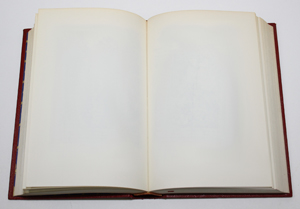
She read the first page. The book seemed to be a biography, though she could not identify the subject. She leafed through the rest of the book, but stopped when she realised she was turning blank pages. Beginning again, she counted three chapters totalling fifty-two pages of text, followed by another two hundred or more empty pages. Frowning, she passed the book to Jim.
“What do you make of it?”
After rifling through the book, Jim said, “How odd!” Holding it open at two blank pages, he pointed it towards Robert. “Remind you of anything?” Having failed to provoke a reaction, he added: “Like that novel you never quite get round to starting.”
From Robert’s tight-lipped expression, Alice judged he didn’t want to discuss the subject. Jim, however, chose to press on regardless.
“Robert had this idea for a novel based on our time as postgrads at Leicester University.” Jim held out his arms as if encompassing their shared experiences. “Like a fictionalised biography.”
Alice smiled at Robert. “Sounds like a great idea. You should give it a go.” In truth, the concept sounded banal, but she did not want to discourage her friend.
“That’s what I thought,” said Robert, shaking his head. “But every time I try to write it, I think of Gareth, which kills it for me.”
The name sounded vaguely familiar.
“Did I ever meet him?”
“No, I don’t think so,” Robert said. “Gareth joined the Physics Department in autumn ’92”
“Yeah, I’d moved to Birmingham by then.”
She sighed. That had been a truly miserable period of her life.
Jim clinked his pint glass against her tumbler and said, “Booze cures all ills.”
Alice noticed his nicotine-stained fingers for the first time. Briefly, she considered suggesting they step outside for a quick smoke, but she refrained from doing so for Robert’s sake. It wouldn’t be fair on him, as he’d given up the habit only recently.
“So, Robert; tell me more about Gareth.”
#
Content with what he’d observed of the trio’s interactions so far, Joseph pushed through the crowd of customers standing close to the bar and placed the ashtray centrally on the trio’s table. The balding man gave him a quizzical look, exactly as he’d expected.
“Um, you do realise that we’re not allowed to smoke in here, don’t you?”
Joseph knew from experience the best way to deflect an awkward question was to act like someone who didn’t give a damn.
“Just part of the decor,” he said with a shrug.
“What–like this book?” The woman tapped its cover with a damp forefinger.
Her action gave Joseph the perfect excuse. He pulled a cloth out of his waistband, snatched up the book and wiped its cover.
“It’s not for reading,” he said.
All three of them laughed at him while shaking their heads. Nevertheless, he returned the book to its place on the shelf and made his way back to the bar.
#
Jim winked at Alice and then mimicked the man who’d removed the book.
“It’s not for reading!”
Robert chuckled while shaking his head. “Like Gareth’s PhD thesis!”
“Yeah, blank pages would have improved that a lot.”
With both men now in a much better mood, Alice took the opportunity to excuse herself and join the queue for the Ladies. But when she returned, she found them sitting in silence again, their expressions dour. Keen to lighten the mood again, she picked up the ashtray and turned it around in her hands. “Oh!” she exclaimed on seeing “No Smoking!” flash repeatedly at its centre. The warning ceased when she put the ashtray down but started up again when Robert flicked a beermat into it.
“Presumably, it’s for the benefit of visitors from more civilised countries,” Robert said, as he passed the ashtray to Jim. “You’re the electronics expert. What do you make of it?”
“It reminds me of Gareth’s X-ray detectors.”
Jim’s joke broke the ice.
“Yeah,” Robert said with a smile. “Those mostly ended up as ashtrays.”
Relieved to see both men smiling again, Alice offered to buy a round. Several minutes passed before she caught the barman’s eye. Jim came to help her carry the glasses. On returning to the table, she noticed Robert’s glum look.
“What happened to Gareth?”
“He died in a train crash…last year.” Robert’s voice faltered as he spoke.
Jim shook his head. “That was so wrong.”
“Yeah, if he was going to cop it, he’d have wanted it to be while he was doing 150 on his Kawasaki.”
Silence descended again. Robert looked close to tears. As an outsider, Alice found it difficult to witness their grief. She considered making her excuses and departing but decided it would be churlish–and possibly not in her best interests.
The bell rang for “last orders”. To Alice’s surprise, Robert ignored it and resumed his recollection of Gareth’s escapades.
When the bell rang for the second time Alice watched the man who had shown such a possessive attitude to the unfinished book shepherd disgruntled customers towards the exit, before finally turning his attention to their table. She glanced at Robert, worried that in his maudlin state he might cause trouble.
“The bar has closed,” the man said. “Please take your drinks downstairs.”
Robert glared at him. “Why the rush?”
The man crossed his arms, smiled wearily, and said, “It’s time to go.” Then he walked over to another table and repeated the ritual.
“I’m going for a pee,” said Robert.
Now’s your chance, Alice told herself.
“So, Jim, what’s your journey home like?”
“Piccadilly Line to Leicester Square then Northern Line to High Barnet. Not quick at the best of times.”
Alice grimaced in sympathy.
Jim smiled at her. “Fortunately, my flat is only five minutes’ walk from the station.”
She smiled back, happy to have secured that titbit of information, but wary of pushing her luck. Still, if all else failed she’d sweet-talk Robert for his mobile number.
When Robert sat down again and resumed sipping his beer, the man loomed over them almost immediately.
“I have already asked you to leave, but you ignored my request.” He fixed his gaze on Robert. “So now I’m telling you.”
To Alice, the man sounded considerably more agitated than the situation warranted. He was sweating heavily too.
Robert got up from his chair, a little unsteadily. He stood toe-to-toe with his antagonist, glowering at him.
Alice tugged at Robert’s right arm. “Come on, let’s go.”
Robert shrugged off her hand and turned away. Alice gathered up her jacket and shepherded the men out of the bar.
Halfway down the staircase, Alice heard a beeping sound coming from the upstairs bar. Worried that she had left their phone on the table, she hurried back up the steps, but the sound ceased before she reached the top. Dismissing the thought, she continued down to the ground floor.
Outside, Alice found Robert and Jim standing in the heavy drizzle, seemingly sharing a joke while Jim lit up. As she walked up to them, they exchanged glances and then each grabbed a hand. Laughing, they splashed through the puddles towards Piccadilly Circus.
Jim was squeezing her fingers.
#
Joseph had just closed the door behind the late-leaving trio when the ashtray started beeping. Fearing the sound would carry, he rushed over to the table. He prised open a panel in the ashtray’s base and pressed the tiny stud within. If the recorder had exhausted its battery any sooner, the situation would have been embarrassing at best, a police matter at worst. He had never previously forgotten to change the battery before deploying his homemade bugging device.
He stood by the open window, gulping in great draughts of cool air, letting the tension that had built up over the previous hour drain away. When he felt calm again, he retrieved his daysack from a cupboard beneath the bar, extracted his laptop and placed it on the table by the window. Once it had booted, he downloaded the audio data from the ashtray and piped it into the laptop’s dictation software.
The sound of the door clicking open made Joseph jump. He looked over his shoulder and saw Harry leaning against the doorframe, his meaty elbows crossed, his eyebrows raised in a here-we-go-again expression.
“Won’t be long,” said Joseph.
Harry grunted. “It’ll cost you.”
A twenty-pound note persuaded the barman to stomp back down the stairs.
The transcription process ran in real-time, so Joseph began his chores. He collected the glasses, mopped up the spills and rearranged the chairs around the tables. Then he closed the windows, diminishing the sounds of car horns and Friday-night revelry. By the time he returned to the laptop, the first stage of processing had finished. Only now would he discover whether his bug had recorded anything worthwhile.
He scrolled through the text, stripping out extraneous material and marking up those nuggets that his pirated TellTales software could work with. On reaching the end of the transcript, he permitted himself a smile. Finally, after months of frustration, he had recorded a few precious memories. But would they prove sufficient?
There was only one way to find out.
Joseph selected TellTale’s “Biography” option, loaded the edited transcription, also the database he’d compiled while researching Gareth Llewellyn’s life. After crossing his fingers, he clicked “OK”.
He looked on–no less fascinated than on the three previous occasions he’d successfully recorded his targets–as paragraphs of narrative iteratively assembled themselves from the snippets of conversation. The process accelerated as the information from the database diffused through the text. Even to an experienced computer programmer, the process seemed tantamount to magic. No wonder Hollywood had stopped using scriptwriters.
While he waited for the process to complete, Joseph mulled over the fact that his obsession with reconstructing the lives of the dead from the memories of the living left him with no time for a life of his own. But perhaps that was appropriate. After all, he was the person who had caused those memories to become precious in the first place. Three years after the Swansea rail disaster, memories were all that remained of the seventeen commuters who had perished on that freezing January morning. Seventeen lives terminated because a contract programmer called Joseph Connell had failed to check a vital block of code that controlled a signaling system.
Bugman indeed.
A chime from the laptop interrupted Joseph’s reverie. He pulled the jacket-less book from the shelf, inserted his forefinger inside the spine and activated the data link to the computer. When he opened the book to page fifty-three, paragraphs were already forming on the virgin paper. Within seconds, Chapter Four of The Book of Love had printed itself. Joseph smiled as he read about a madcap chase through the back streets of the city, a squad of policemen trailing behind Gareth and his friends. He chuckled at a description of a staff-versus-students football match that resembled mud wrestling more than a traditional sporting event. And then there were the tales of piss-ups and parties, the ridiculous arguments about nothing in particular: all the stuff of an ordinary life.
Joseph wiped condensation from the window but saw nothing of the city or the rain. Instead, he was imagining Robert and Jim, several years older, reading Chapter Four of The Book of Love. He hoped it would please them.
“Remember your friend well,” he whispered.
It was time to move on.

Having trained as an astronomer and subsequently managed a research group in a defense and aerospace company, British author Vaughan Stanger now writes fiction full-time. His short stories have appeared in Interzone, Daily Science Fiction, Abyss & Apex, Postscripts, and Nature Futures, among others, and have been collected in ‘Moondust Memories’ and ‘Sons of the Earth & Other Stories’. Follow his writing adventures at www.vaughanstanger.com or @VaughanStanger.”
A touching story. Memories are all we have left once loved ones have left.
[…] year, I’ve seen new stories published online at The Quiet Reader #2 (The Book of Love) and at Tales from the Cybersalon: The Future of the High Street (The Little Shop That Could – my […]