
I am writing this story for posterity. In case I stop resisting the ocean’s pull and one day vanish. If my body is not recovered, or even if it is, this letter will explain my disappearance, for my family’s sake and to satisfy anyone curious to know what would drive a man to such lengths.
My name is Michael Tillson. I am a diver… or at least I was a diver. If I value and love my life — which I think I do—I can never be a diver again. Though which is stronger — life or love? And what if you can’t have one without the other? You compromise — which is why I must ignore the ocean’s siren call and remain safely on land. So now I am a diving instructor shackled away from the sea. I teach on Sombrero Beach in the Florida Keys, showing adventurous college kids the intricacies of exploring the ocean, revealing the briny secrets of the ocean from a distance. I work with my business partner and former diving partner, Ryan White, a burly guy from Michigan who had escaped the cold, drawn south by Florida’s warm waters and the chance to spend his life in their warm embrace.
I teach the kids the theoretical concepts of diving, showing them the gear and equipment, then my partner goes with them into the water. I demonstrate to them how to balance their buoyancy with a BCD, or buoyancy control device. I show them how to calculate the number of lead weights to attach to their belts. I teach them how to use their dive meter on their wrists to read the depths of their explorations. I explain to them the correct mixes of gases for the various dives; the ratios of oxygen, nitrogen, and helium. All these steps are meant to guide the landbound through the ocean’s portal, a door for me which must remain firmly closed.
This is to shelter me from a lethal diving hazard called the rapture of the deep, an eerie term coined by Jacques Cousteau that has an intimate, deathly significance to me. It is an euphoric and deadly siren’s call, the ultimate threat to divers. It’s a risk for every dive; you never build a tolerance to it.
It is also known as nitrogen narcosis. At high pressures, nitrogen contained in gas mixtures invades nerve fibers and temporarily halts their workings.
Rapture causes both physical and psychological symptoms. Some divers have ripped off their wetsuits in panic; their internal thermostats short-circuit and they can sense extreme heat when in fact they are experiencing deathly cold. At 30 m, you would begin to feel mania, a grandiosity which affects your concentration. At 50 m, hallucinations. Some divers experience uncontrollable laughter. For others, terror.
My deepest dive was 100 metres. And what I was about to see, what I was about to experience, will haunt me to my final days.
What happened is the reason I don’t dive anymore. I became an instructor because I thought it would be less risky, that I could get as close to the water’s edge without dipping my toes in, but it’s like dangling a bag of heroin in front of a recovering addict. When Ryan accompanies the students into the water, I turn my back to them and hold my breath. It takes all of my willpower not to follow.
In the time of explorers, sailors didn’t have a name for this syndrome. Instead, they created a legend which described mermaids luring divers to their deaths. Creatures who used their beauty and songs to trick men and drag them to the bottom of the sea.
It’s not to be scoffed at. It’s a myth grounded in truth, which leads to my unhappy confession.
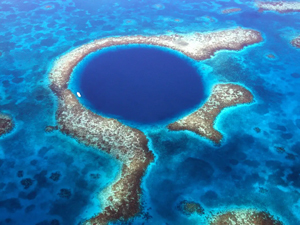
My last and deepest dive was in the Blue Hole, north of Dahab, Egypt, off the coast of the Red Sea. It is a sinkhole, an underwater cave that has formed a natural arch, a twenty-six metre tunnel which connects it to the ocean. Think of it like a teapot of water (the sinkhole) immersed in a swimming pool (the ocean) with the spout from the teapot connecting its water to the pool’s surface. The floor of the sinkhole deepens in increments, with shallower floors leading downwards, like stairs on a staircase. At its deepest point, it has a depth of one-hundred and thirty metres, deep enough to kill all but the most experienced divers.
The Blue Hole is divers’ Mount Everest. We dive it because it is there. It’s a chance to accomplish a feat symbolic of man’s ability to overcome his limitations, to declare physical superiority and spiritual maturity among intrepid adventurers driven by incalculable hubris. Like Everest, the Blue Hole is a graveyard for those who accept the challenge yet fail to conquer its rule. Thus, it is also known as the Diver’s Cemetery.
Its beach is sandy and stunning, marred only by scattered memorials which dot one side of a cliff. Its waters are clear and calm; as a diving spot, it is the most beautiful and the most deadly. Inexperienced divers can lose their bearings trying to find the arch leading to the ocean and are lost forever in the cave. Or they underestimate its depth, develop nitrogen narcosis and drown. It has claimed the lives of over a hundred and thirty divers.
The Blue Hole has its own spin on the mermaid legend: in order to escape an arranged marriage, a girl drowned herself and her spirit lures divers to their deaths. The Bedouin tribes who live in the area avoid the Blue Hole, as they believe it is possessed by the girl’s ghost.
I entered those waters on that fateful day, accompanied by my diving partner, Ryan. It was to be the dive of a lifetime. We’ve been to Bunaken, Indonesia, where orange clownfish hide in the pink arms of sea anemones and watched eagle rays glide past us like silent underwater UFOs. We’ve been to Cocos Island, three hundred miles off of the coast of Costa Rica, where we were surrounded by a school of white-tipped sharks. We’ve recorded over three hundred dives together. But nothing prepared me for this.
It’s impossible to overemphasize the importance of having a diving partner. He was the one who, in the end, saved my life.
We had chosen a good day for our dive. The previous day had been too windy, the ocean too choppy for an attempt. Now, gentle waves rolled over the ocean’s surface. The water was a bright, turquoise blue the color of Mayan jewelry and matched by an unmarked sky. The beach held a few chairs, a thatched hut for drinks, and a faded painted sign reading “Easy Entry” with an arrow pointing the way.
Despite its deadly history, the Blue Hole looks deceptively peaceful; this illusory calm is part of its lure. It can also be a diver’s undoing—I was lulled into thinking all would be well. I ignored the fourteen memorial stones for ill-fated divers—they were inexperienced, they had miscalculated their weights, they hadn’t paid attention to their depths, all factors I thought I had mastered. Young and healthy, I was filled with a blind denial of death, like those who climb past corpses on the summit to Mount Everest. Powered by the foolishness of youth, a warning became a challenge.
Ryan and I performed our safety checks, going through the other’s equipment to ensure nothing was forgotten. One small mistake could quickly cascade of into a series of errors, a rapid downward spiral of miscalculations resulting in death. When you dive, you are at the mercy of the ocean. At best, she is indifferent. At worst, hostile.
The plan was to dive to fifty-two metres, find the tunnel, swim through it to the mouth of the ocean and return to the Blue Hole.
As I sank under the cool waters, a Picasso triggerfish glared at me with its orange eyes and pursed its yellow lips at me before it turned its tail as if to shun the presence of an inappropriate interloper. A puffer fish camouflaged itself among the rocky stones, sharp spines flat against its grey body as it retreated into obscurity. Reef fish scattered at my approach, underwater sunlight shimmering against their scaly bodies.
I struggled to keep up with Ryan who was only a few metres ahead. This was the most dangerous dive I would ever undertake, and losing sight of my diving partner might mean losing my life.
As the dive deepened, the clear blue water turned murky. Silt and sand churned from the rocky bottom. Ryan disappeared, consumed by a submerged sandstorm. I couldn’t read the depth on my diver’s watch. I switched on my diver’s light. Only more swirling sand. I swam deeper. I couldn’t find the entrance into the tunnel. Time passed.
When the silt settled, I finally could read the meter gauge. Ninety metres. I tapped the gauge, doubting its accuracy. I tapped it again. It registered a new number: ninety-two metres. This was trouble; I had never dove so far, dangerously over my head. I wrestled with my belt weights, trying to release them so I could ascend. But my fingers failed me. Numb. Limp. Vestigial appendages.
My head spun. Darkness engulfed me and I couldn’t judge which way was to the surface. Narcosis was setting in. I tried to slow my breathing—hyperventilation would only draw more of the toxic nitrogen into my body and accelerate the process. Then momentary clarity, when I thought to use my tank to inflate my buoyancy control device to help me to the surface. Failure. I was over-weighted.
I kicked my flippers. They moved as if in slow-motion. My brain couldn’t communicate to them the urgency of the situation.
As I sank deeper, pressure pressed painfully on my chest and my vision blurred. I felt as though I was choking. Like a climber with hypothermia on Mount Everest, instead of feeling cold, I felt burning hot. What little was left of my rational mind prevented me from tearing off my gear.
Around me floated an immense forest of seaweed, which only added to my confusion. As I swam on, the strands of green seaweed grew darker, nearly black, and thinner, almost like hair. They knotted around my legs and wrapped around my arms, pulling at me, drawing me within. I was a marionette caught in its strings.
As I drew my arm back to loosen their grip, something turned and flashed white before me —
— a face?
Sara?
The familiar features stared back at me through the seaweed: the upturned slope of her nose, the lines of her cheeks curved and cold like carved marble. Vivid, searing eyes which haunt my dreams. My hands were wrapped in her dark hair and despite the deathly cold of the ocean’s waters, her hair felt warm and alive.
Sara.
My fiancée.
Who had died the previous year.
Her face was alight, brightening the waters like a beacon. Her dark eyes widened, ablaze with happiness. She was just as I had remembered her. Despite my pounding heart, I descended into a deep calm. Her face exuded such caring and happiness that my panic receded, the physical desperation of my body melting into her hypnotic smile. Suddenly I was buoyed by the breathlessness of joy as her vision overcame the pain of oxygen deprivation.
She opened her mouth, breathing a song into the frigid waters. A heart-breaking tune, soft wispy and ephemeral, so vague as to defy description. A song whose lyrics I struggle to remember, but whose melody I delight in recalling, with its intricate and fleeting patterns, delicate and as beautiful as frost patterns on a window pane. A voice so clear I could only have heard it in my mind.
And it wasn’t just any song. It was our song. A song of our past lives together, our shared memories, and the promise of our future together.
I was at war with my rational self, torn between fact and emotion. I knew she couldn’t be real. Buried the previous year, how could she be here, living at the bottom of the ocean? I shone my light towards her, its thin beam caressing her lithe form. Through the murky gloom, the diver’s light reflected off of the emerald scales covering her skin, starting at the top of her waist, curving over the arc of her hips, and ending at the tips of her dolphin-shaped tail. My siren beneath the sea. I pulled her into a tight embrace, the ocean’s water cocooning us in its hold. I have never felt such happiness, drowned not by the deep water, but the return of lost love.
I would’ve been content to remain there forever, but strong hands ripped me from her arms. I reached towards her, but her image receded into the swirling sand as I lost sight of her. My limbs felt like dead weight and my heart tore in two; after her death, it had healed incompletely and now the wound broke along its fault line. My heart’s rapid beat was not the panic of fear but that of desperation as she once again slipped from my grasp.
The ascent was as unclear as the silty waters I rose through. Later, Ryan told me I was unresponsive when he had found me, my hand in a death grip on my diver’s light. Its beam had led him to me as I floundered in the depths, close to death.
“Where is she?” I asked, my first words when I glimpsed Ryan standing at the foot of my hospital bed.
“What? Who?”
I resisted speaking her name. I knew it would sound like madness. Diver, suffering from nitrogen narcosis, sees dead fiancée who has returned as a mermaid. “Did you see anyone? I mean…I thought someone was with me.”
“Another diver?”
I shook my head. “No.” He must have seen my downcast eyes because he didn’t press me further.
“You must’ve been hallucinating. When I found you, you were so still I thought you were dead.”
Another few minutes and I would have been.
She’s the reason I’ve stopped diving. Not the fear of death, but the fear of seeing her again. The want of seeing her again. She would be the reason if I dove once more and vanished into the depths of the ocean. I know she was a hallucination, nitrogen bubbles percolating my brain, confusing and blurring the lines between fantasy and reality, abject joy a by-product of chemicals misfiring.
And yet…
On sleepless nights, I imagine the cocoon of the ocean lulling me to sleep. The darkness, the stillness. With the passing of the years, the lure becomes harder to resist; her song beckons me in my dreams. Her siren’s song with its promise.
I know I can never dive again. If I did, I would be tempted to dive deeper and deeper, until I was once more reunited with her. The pull between life and love. Which is stronger—life or love? One day, I won’t be able to resist having one without the other. I long for the warmth of her arms cradling me into eternal sleep. Entangled in the embrace of my one, my love, my rapture of the deep.

Lena Ng lives in Toronto, Ontario. She has short stories in fifty publications including Amazing Stories. “Under an Autumn Moon” is her short story collection. She is currently seeking a publisher for her novel, Darkness Beckons, a Gothic romance.