
The first thing you need to know about cousin Faivish is that he’s an imbecile.
Talk to him at any level above mere inanities and his eyes glaze over after half a sentence. After two, they start to wander about the stockroom. After half a dozen, his head starts to follow, as though his chin is somehow attached to his drifting eyeballs, jerking it along behind them. Give him instructions and, at the point you expect his feet to move and for him to go off and do something, he remains as still as a statue.
Like I say, a halfwit, a boneheaded numbskull, a moron.
The only person who did not treat Faivish like an idiot was my father and for that Faivish doted on him in the same unthinking way that small dogs dote on their masters, which is what my father was in a very literal sense. Even at sixteen, I could see a degree of pitifulness, both touching and pathetic, on both sides.
Only once did Faivish not adhere to this stereotype. What’s that quote about seeing a dog walking on its hind legs, that you’re not surprised at it done so well as it done at all? Well, this was Faivish walking on his hind legs.
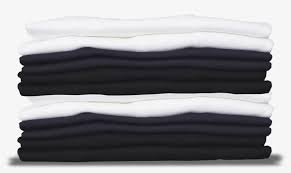
It all started on a Tuesday afternoon in May 1973 when one hundred white t-shirts arrived unexpectedly.
My father signed for them as a burly man in blue coveralls propped a loaded trolley against his foot and held out a clipboard, his body language making the non-negotiable nature of the situation clear. The name on the docket was Faivish Stern. My father was only expecting ten. We stacked them in the corner, a big pile for a small tailoring shop.
Cousin Faivish just stood and gasped when my father told him what had happened. It was an expression almost entirely devoid of meaning.
“Are we to expect a flood of anything else? Chalk? Pins? Coat hangers? What else will be arriving that I’ll have to sign for? Wool still on the sheep?”
Faivish seemed to focus on a point in space somewhere between my father and him. He rocked on his heels like he’d been hit.
“Oh Faivish, Faivish. You are a good boy, but there are many things you need to keep on top of in this business. You have to be like a duck: calm above but busy underneath. Always busy.”
Or good with plum sauce, I thought.
The other thing you must know about my cousin Faivish is that he isn’t really my cousin.
Officially, he’s a ‘revitalization’. Even if there are a lot of other, less polite, names in circulation for what he is.
Revitalizations had been invented in the nineteenth century but had only become practically workable at the turn of the twentieth. Even so, the person revitalized was only ever a shadow of the human they had once been. Popular during wartime for obvious reasons, each new generation was marred by some scandal, disaster, or outrage. Every time things went belly-up, headlines screamed ‘Revitalizations Wreak Havoc’, ‘Frankenstein’s Monsters Go Mad’. The most recent fad had faded rapidly after a grisly incident involving a packed yellow school bus, and the Tennessee River in Chattanooga. My father, ever the businessman, had bought at the bottom of the market. The afternoon Faivish arrived is etched in my memory. I was seven.
“Victor Frankenstein was misunderstood,” my father had argued.
“So was Hitler,” spat my uncle. “He just wanted attention.”
“He was a genius.”
I hoped my father meant Frankenstein, not Hitler.
“It’s not for people like us to understand genius. I’m not even going to try.”
“But you’re happy to buy one of his dolls,” my uncle countered.
“Why can’t we just keep the business in the family?” questioned my mother, trying to pour reasonableness on troubled waters.
“Because the next generation don’t want to become tailors.”
I did, and I said so. True then, true now. Tailors and seamstress. That’s what our family was, what we have always been. A seamstress was my fate. I’ve always enjoyed the comfort of certainty.
“No, really you won’t,” my father baldly stated. “Faivish will allow you to follow your heart, wherever that takes you.
“My heart says seamstress,” I declared.
He wasn’t listening. “There’s a whole world out there opening up, way beyond a dark and dismal basement on Bleecker Street.”
“Won’t he scare the customers?” my mother observed.
“I like dark and dismal,” I chimed.
“You’ve given it a name already?” my uncle scowled.
“Cousin Faivish.”
“Cousin Zombie, more like” my older sister said.
My father wagged a finger. “Don’t call him that. He has feelings.”
“Are you sure?” my mother wondered.
“He’s Cousin Faivish. He’s part of the family. And he’s here to stay.”
Even so, we all assumed that he would sell at the top of the market which, after the Gulf of Tonkin incident, came quickly. Now Vietnam had been on every front page for the best part of a decade, rivets were sought after, and he could have sold at a profit. But, for whatever reason, Faivish had stayed.
* * *
That evening, as was customary most evenings, my sister Geula sat at the table silently crying. She had quickly learnt to cry without noise and now managed to weep without tears as well. All that was left was a rocking of the shoulders.
“Sometimes, when people climb the career ladder, they drop their friends so that they can find them again on the way back down,” my mother clucked over her.
“There is no down for him,” Geula croaked. “He’s a patent lawyer on Fifth Avenue.”
“Seven months,” my uncle complained, easing his shoes, “How much longer?”
“Give the girl a chance,” my mother scolded.
“Seven months,” my uncle repeated. “It’s time to move on.”
Like actors expected to repeat the same lines night after night during the run of a show, the conversation rarely varied.
My father appeared late looking both unusually tired and unusually pleased with himself. My mother ladled out rice and chicken and looked sideways at him. “What have you been up to?”
“You’ll see in the morning.” And that was all he’d say.
I knew it had something to do with the surfeit of t-shirts. To my father, challenges created by Faivish were akin to a vase of flowers knocked over by a puppy; somehow in character and, if anybody’s fault, the fault of the owner for putting a puppy and a vase of flowers within the same orbit. At least it wasn’t a thousand t-shirts is what my father would be thinking. He had probably convinced himself that the t-shirt order being out by ‘only’ a factor of ten was somehow ‘lucky’. Faivish’s errors, accidents, and omissions were part of the cosmic order.
The next morning on the sidewalk in the front of the shop hung a rail of white t-shirts, twenty or so, screen-printed with the figures ‘$4.99’ across the front in twelve-inch high black blocks. My father had made the pattern the night before and had printed them on the old silk screen press we kept in the basement. The letters were clearly hand drawn, but tried to imitate something more conventionally typographical, perhaps a newspaper typeface. I liked their immediacy, their boldness.
“How much are they?” is all Faivish asked.
“Zombie,” I muttered under my breath at him.
Although many people came into the shop that day nobody repeated Faivish’s question. My father would emerge from the basement every so often in between putting in stints on the bespoke suits, holding chalk or needle and thread, to watch people walking past through the shop windows, to see how they reacted to the t-shirts. Most ignored them. Some flicked quickly through the items or frowned. At the end of that day the rail of t-shirts remained exactly as it had begun.
It was only on the third day that one of them sold. She was a young woman, about my sister’s age, long black hair, sunglasses, wide-brimmed hat that she kept on inside. Something of kaftans and the Rolling Stones and marijuana cigarettes about her. She walked slowly around the shop, chin held to the side to take in the garments as they passed as though she was a passenger on feet that wouldn’t stop. One lap of the shop and then back through the door, probably disappointed that we were a tailor’s, not a chi-chi boutique.
And then she stopped at the rail.
She took one of the t-shirts off and held it, firstly up to herself, and then out in front, pondering. I wondered about going outside to point out that we had a full-length mirror within, but she came back in, the bell on the door tinkling, and paid for it with a five-dollar bill. She waved the penny away and took her brown paper bag with our name on and was gone.
“Did she ask how much it was?” my father asked.
“She didn’t say anything. Not a word.”
“But she knew it was four ninety-nine?”
“Yes.”
My father looked unusually pleased.
Early the next week two other girls, as my mother would have called them, came in and bought a tee each. It was all giggles, furtive looks, and exchanged glances. Hanging on the rails were pants and jackets, shirts and ties. I wanted to tell them that they were acting like we sold fetish gear and if they wanted that then they should try Kordaski’s, three blocks down; we sold perfectly respectable clothes. I should know about Kordaski’s: I often finished the stitching for him.
My father bragged about it at dinner, tearing his bread and scattering crumbs.
“You sold three,” my uncle barked at him, holding up three fingers. “Three. There are—how many?—ninety-seven left. It’s not like you’ve invented the hat.”
It was early summer when my father was again late for dinner, not as late as the night he screen-printed the first batch of shirts, but late nonetheless and again smug and secretive. We knew it had something to do with the t-shirts. He was never like this over proper clothes. He took pride in them, in the cut of the cloth, in the clinical consistency of the stitching. He could make fat men thin and short men tall by judging the nap and the stripe and the waisting just so. But the white t-shirts brought out a schoolboy giddiness in him. Nobody asked. We’d all find out the next day.
In the morning there was another rail of tees, these with ‘$14.99’ printed on the front. The style of the numbering, hand drawn yet mechanistically boxy and block-like, was the same. They stood one side of the door whilst the remains of the ‘$4.99’ shirts stood on the other.
“They’re the same t-shirts?” I asked my father.
“Two rails outside the shop?” my mother asked. She had wanted to see what it was that he’d been hiding. “It doesn’t look like a tailor’s anymore. We’ll lose trade. People will look at our shop and think that we don’t do fine tailoring anymore. Just rails of overpriced t-shirts.”
Faivish looked from one rail to the other and back again. “So how much are they now?” he asked.
I shook my head wearily. “Zombie.”
My father spent all that day in the shop. He did not do so much as sew on a button. He sat in a chair in the corner and watched the t-shirts through the window. Whenever anybody dwelt outside, he would follow them with his eyes to gauge their reaction. Everything else would be ignored. I had to point out to him that an overweight middle-aged proprietor staring through a shop window at potential customers tends to put buyers off. He harrumphed but knew I was right. Instead he picked up a copy of the Daily News and watched them over the top of the paper. It looked even worse.
The thermometer rose day by day. We worked with the doors and windows thrown open all day and into the evening. Summer always turns the volume of the city up. Car horns, radios, sirens, televisions, engines, shouts, laughter, running footsteps. Occasionally a car backfiring like a gunshot; more rarely, a gunshot like a car backfiring. A constant mix carried on the heat through everybody’s open windows. I had spent three straight nights stitching corsets for Kordaski. Black lace numbers with blood red ribbons, clashing stitching. I was beat and had taken the afternoon off. Cousin Faivish could help father on his own.
That evening they came back from the shop earlier than usual. My father’s eyes sparkled. He had a story to tell. Cousin Faivish bobbed behind him like a small child eager to illuminate and illustrate the main tale.
“A man,” my father began, never liking to get to the heart of a story too quickly, “An ordinary man, stops and looks at the rails of t-shirts. He looks at one rail. Then he looks at the other rail. He chooses a t-shirt and brings it in the shop. He’s chosen a $14.99 t-shirt. The more expensive t-shirt. Ten dollars more.”
“So, a mad person walks the streets of New York. Is that news?” my uncle retorted.
“Don’t you see? I call a thing ten dollars more and people pay ten dollars more.”
“Because they trust you and therefore trust that it’s worth ten dollars more,” my mother complained.
“But it’s clearly not. It’s the same t-shirt. Everybody can see that. Even Faivish can see that it’s the same garment.”
It was the first time that my father had ever suggested that Cousin Faivish was not playing with anything but a full deck. Even for a revitalization he was clearly backward; most of us suspected he’d been made with rejected parts, offcuts from more desirable creations.
And then it happened. I was stitching pants in the front room, making best use of the late afternoon sun with the television burbling away in the background, tennis from Flushing Meadow. A crowd shot during a break. People getting up, sitting down, chatting, laughing, looking around, just waiting for the match to start again. And the commentators, filling in, picking out a ‘$4.99’ and a ‘$14.99’ t-shirt in the crowd and making a joke of it. Compare and contrast. What it said about the wearers. Which one was in the more expensive seat?
It lasted a moment then Rod Laver and someone else got up and the match resumed. But there could be no mistake. They were my father’s t-shirts. I screamed, but only because I’d pricked myself, but I think I would have screamed anyway.
I ran down the stairs to the shop three at a time to tell my father and Faivish. Grinning like the loon he was, Faivish clapped his hands, stepping from foot to foot excitedly. My father, however, did not react as I expected, his eyes darting from side to side in rapid, feverish thought, his head slowly nodding.
“Good,” he said quietly, rubbing his hands together, “good”.
I slunk back upstairs to work on the pants, one step at a time, not quite sure of what I had started.
* * *
Over the next fortnight we sold twenty more t-shirts, six of them at the higher price. My father was spending less and less time in the shop, disappearing without explanation or information as to his whereabouts or time of return. I was having to become adept at apologizing for his absence and taking note of the more complex alterations.
Some customers were visibly uncomfortable at having a teenage girl nip and tuck and pin the first drafts of my father’s creations as they stood there wearing them, arms outstretched. It wasn’t a job that I should have been doing, but without knowing when my father would return, I could hardly send customers back out onto the street. I tried to be as professional and discreet as possible, pulling at the cloth, pinching it just so, but I didn’t always get it right the first time, and sometimes even managed to pin flesh to fabric.
“You always tell me that I know more than I think I do,” I told my father one evening after admitting that I had chalked the first cut of a new suit of a particularly demanding customer.
“You do,” my mother called out from buttering a chicken.
“But you should do it when I’m there,” my father protested across the dining table.
“But you’re never there. We don’t know where you are. But what I do know is that we’ll lose business if we carry on this way.”
My father’s face turned oddly glassy at that. “It won’t be for much longer,” he said simply.
Recalling that scene now I have an image of my mother being within earshot but out of sight in the kitchen. But I also distinctly remember her raising her eyebrows at her husband’s words. Strange how memory works like that.
* * *
It was a few days later that my father failed to return home, at least not until after I was in bed. I heard him come in and looked at my bedside clock. It was three in the morning. I could hear voices, raised yet restrained, my father trying to calm my mother. It lasted a few minutes then all went silent again, or at least as silent as the city can be at that time of night.
He did not appear the next morning and, when Faivish and I went to open up, there was a notice pasted in the window announcing a new shop on Sullivan Street. Faivish and I looked at each other and for once my uncomprehending expression matched his.
“Zombie,” he muttered at me.
Sullivan Street was about a ten-minute walk away, through streets that would be boho chic in years to come but were then just plain hobo poor. There we found my father standing in a doorway, above which was the name ‘Stern’, devoid of any explanation as to what the shop sold, or even if it was a shop. Inside, bright white walls, quite the opposite from our dim warren of a tailor’s shop, and rails of white t-shirts. They were all screen-printed in my father’s style. In addition to the $4.99 and $14.99 tees, there were $24.99, $34.99, $49.99, $74.99, and $99.99 garments. All identical save for the black block figures on the front.
“What do you think?” my father asked.
I didn’t know what to think, so I asked him how much it all cost instead.
“This isn’t a cost, this is an investment. We have five hundred more t-shirts being delivered tomorrow, different colors, all pre-printed with different prices.”
Faivish leafed through the garments on the rail. He’d stopped asking how much they were, but his face said he still couldn’t compute the logic behind the answer.
“There’s a stack of dockets in the shop. Repairs and alterations. What do you want me to do about them?” I asked.
“You manage the shop now. You’re old enough. You know more about cutting suits than you think you do.”
“What about Faivish?”
“Faivish can decide for himself. What’s it to be Faivish, suits or t-shirts? The past or the future?”
“Craftsmanship or salesmanship,” I cut in without thinking. And I suddenly realized that I wanted to protect Faivish, poor imbecilic Faivish, the amalgamation of body parts reanimated by fifty thousand volts with his twelve-month parts and labor guarantee long since expired, from all this. We looked at each other. I suspect there was fear in my eyes, but there was only blank incomprehension in his.
“Do you know what hubris is?” I asked softly.
“Does he sell t-shirts too?” Faivish responded, baffled.
What none of us had realized was that whilst we were arguing Stern had gained its first potential customer. He had his back to us as he browsed through the rails. Little more than a boy with a bag slung over one shoulder. Blue jeans and a navy blue peacoat, the sort worn by sailors.
“We’ll have many, many more t-shirts tomorrow. Different colors,” my father called cheerily.
“Different prices,” Faivish followed up helpfully.
The boy turned around.
Underneath the unbuttoned peacoat was a t-shirt.
A white t-shirt.
A white t-shirt with numbers on the front.
The boy put his hands in his pockets pushing back the peacoat, revealing more of what he wore below it. A white t-shirt with black numbers on the front. Curling, curving, flowing numbers. Not my father’s bold, boxy, robotic numerals. This was more like handwriting than imitation hot metal. Handwriting that signed off with a flourish.
Handwriting that said ‘99c’.
“Thanks,” the boy said flatly and drifted out of the shop, pausing to glance at one last item in what I knew was merely his way of not appearing to leave too quickly.
I ran out onto the street, after him, almost spun him round. “Where did you get that?” I must have come across as a mad girl, panting, probably spitting as I spoke.
“They’re selling them on the steps of NYU,” he said, backing away.
I ran there.
There were rails of them. Each and every one with ‘99c’ printed on the front in that flowing hand in every color under the sun. Dollar bills and tees and pennies changing hands faster than I could watch. Almost everybody seemed to be wearing one or carrying one away.
When I returned to the shop a boy and a girl—he was wearing his, she was carrying hers—were looking at our $74.99 tees through the window. “What are they thinking,” I thought I heard her say to him as I pushed past into the shop.
My father, Faivish, and me. We stood there like Clint Eastwood, Eli Wallach, and Lee van Cleef, just staring at each other. I could tell that my father was lost in the enormity of it all.
“I don’t know what to say,” I said, only because somebody needed to say something.
“I do,” said Faivish. “I may not be good with my mind, I may not be clever, but I do know that there are some things in this world which are wrong, and there are some things that are right. An honest day’s work for an honest day’s pay is right. Knowing the cost of things as well as the value of things, and giving yourself an honest profit, is right. But I also know that simply writing a number on something doesn’t make it worth that. And selling it for that is wrong. It’s wrong and no good will come of it. That’s all I know.”
Faivish hung his head. At that moment, I felt sorry that he didn’t have his customary broom in his hand because I could see his fingers twitch, embarrassed, wanting something to do to deflect our astonished gaze. It was an unprecedented speech and it had, both mentally and emotionally, exhausted him. I had never heard him speak like that before, nor did he ever again in his life. Indeed, he barely spoke more than a handful of words for as long as he lived.
The effect on my father was profound. His body sagged and he slumped down onto a packing crate, chairs being far too prosaic for the ambience he was after for his new shop. Wordlessly, he seemed to question everything that he had done, the very basis for his existence. I crouched down, put my arm around him, but in a very real sense he was a long way from us. Then, slowly but surely, he began to nod his head, as if, mentally, he had reached a place of profound understanding. He turned and looked at me, surprised to find me there, and then, in wonderment, up at Faivish.
“Faivish,” my father said softly, “go back to our shop —our real shop— and get a thousand price labels. We’ll mark everything down to ninety-eight cents.”

Robert Bagnall was born in Bedford, England, in 1970 and now lives in Devon, between Dartmoor and the English Channel. He is the author of the novel ‘2084 – The Meschera Bandwidth’, and the anthology ‘24 0s & a 2 ’, which collects two dozen of his thirty-plus published stories. He blogs at meschera.blogspot.co.uk an can be found in the Amazon store.